
A pack of no show socks rarely wears out at the toe. It fails at the back: the opening loosens, the silicone strips stop holding, and the socks start slipping into your shoes a few months in. Much of that happens in the washing machine and the dryer, and most of it can be slowed down.
Where the care instructions are
Look inside a sock and you will not find a care label. That is not an oversight. The Federal Trade Commission Care Labeling Rule exempts hosiery, anklets included, from a label sewn into each item, so the instructions are printed on the package or a hang tag.
So before the pack goes in the recycling, read the back or take a photo of it. The rule only asks for one safe method, which is why a pack may say "machine wash" and little else. Most of our packs say machine wash, but the instructions are not identical from pack to pack.
Turn them inside out
The silicone strips sit inside the heel. Turned inside out, they face each other instead of rubbing against the drum, the zippers and the denim in the same load. The knit on top of the sock gets an easier ride as well.
Put the socks in a mesh laundry bag. A no show sock is small enough to vanish into a fitted sheet or the rubber seal of the machine, and a pack that loses one sock a month stops being a pack.
Keep the heat down
The opening of a no show sock holds on to your ankle because it stretches and springs back, and that spring comes from the spandex knitted in with the cotton. Heat tires it. Wash in cold or warm water rather than hot.
The dryer matters even more than the wash. Dry the socks flat, or on low heat if you use a machine. A sock that comes out of a hot dryer every week keeps its color and its toe long after its opening has gone loose.
Whites and bleach
Wash white socks with other whites so they do not pick up color from darker clothes. Before you reach for bleach, check the pack. The FTC care rule asks that a label say "only non-chlorine bleach, when needed" when chlorine bleach would harm the product, and "no bleach" or "do not bleach" when any bleach would. If the pack says nothing about bleach, that is not a yes.
Reading the fiber content
The fiber line on a pack follows FTC rules too. Each fiber is listed by its generic name and its share by weight, largest first. Our everyday mesh socks, for example, read 80% cotton, 17% polyester, 3% spandex, and our ruffle crew socks 88% cotton, 7% polyester, 5% spandex.
You may wonder why a 3 percent share is named at all. The rule lets a fiber under 5 percent be named when it has a function at that amount, and stretch is the textbook case. Spandex and elastane are two names for the same fiber, so a pack that says elastane is telling you the same thing.
Rotate the pack
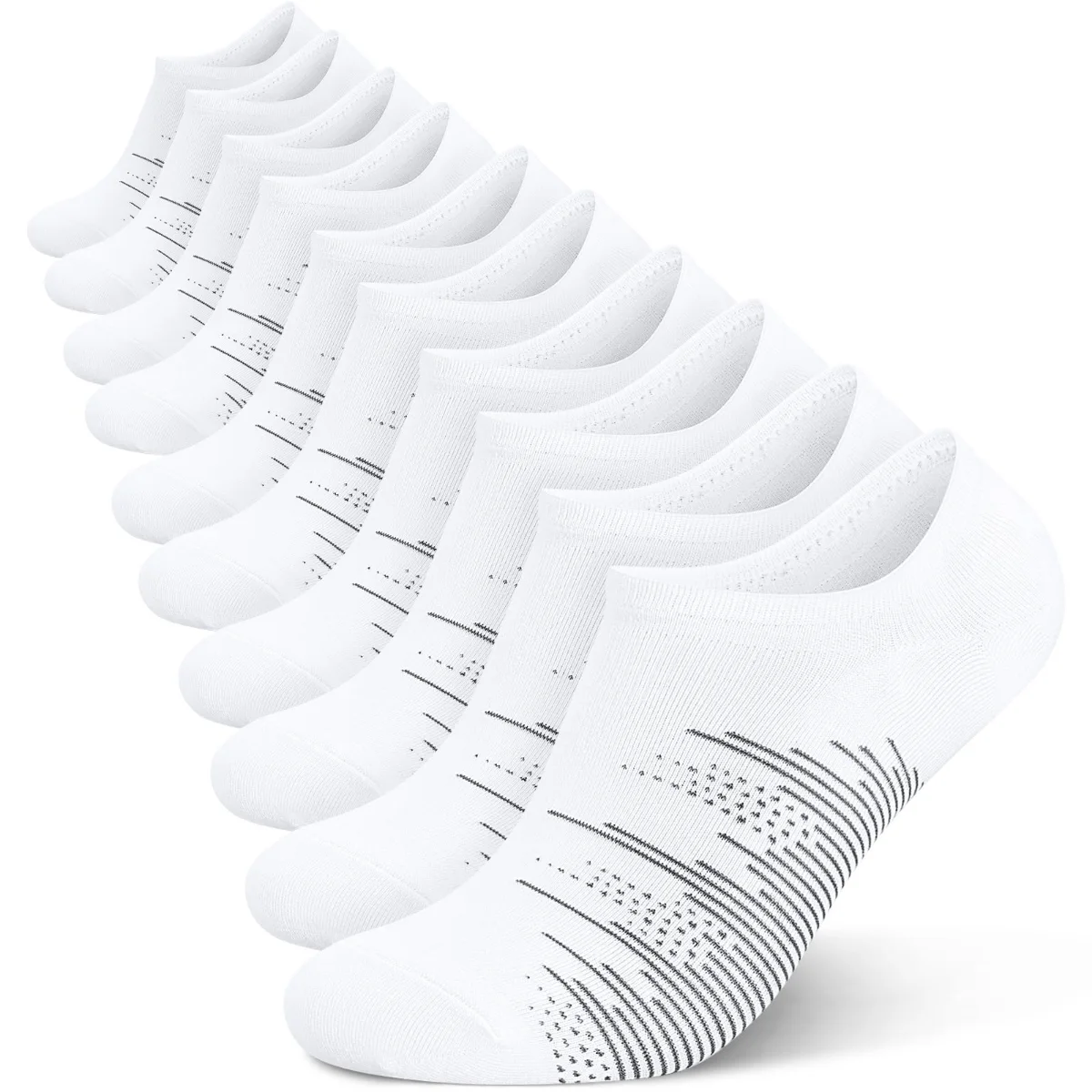
Wernies Men's Mesh Sport No Show Socks
Men's · Low cut no show · US 6–10 and 11–13 · 5 packs
From $9.99The simplest way to make socks last is to wash each pair less often. With a pack of eight or ten, every pair sits out a few laundry days between wears. Wash the whole pack together, too. Pairs that go through the same loads age at the same pace, and they still match when you pull two out of the drawer.
Unsure about a size or a pack? Write to heelgrip@wernies.net and everyone at Wernies will answer.